Volunteer knitters - men and women of various ages and races - dedicated two million hours, nearly 230 years' worth of labor, in the eighteen months the United States was at war. By its end, 45...
Set against the backdrop of the February Revolution in Russia, this short article by Carolyn Harris for Smithsonian Magazine describes the creation of the Women's Battalion of Death. Under the command...
The digital exhibition The Volunteers: Americans Join World War I examines the stories of the young men and women who transformed the meaning of volunteerism. Prompted by altruism, personal ambition,...
In this 10-minute YouTube video, The Great War Channel explores the political, cultural, and social climate in the United States prior to their entry into World War I on April 6, 1917. Show host Indy...
From Smithsonian Magazine, this article looks at the often-forgotten history of internment, deportation, and property seizure on the home front in the U.S., especially for German-speaking immigrants...
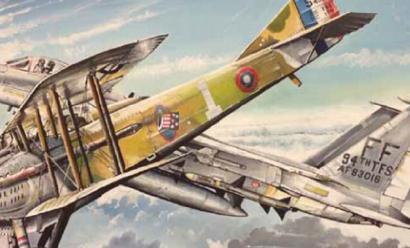
Eugene Bullard was one of many Americans who joined the Lafayette Escadrille, a French aerial squadron of mostly American volunteers; however, Bullard was the only African American. He served with...
The Winnie the Pooh stories of A.A. Milne have delighted children for decades, but most people don't know that the "willy nilly silly old bear" was inspired by an actual bear. Winnipeg, nicknamed...
Historically, a fracture to the femur bone in the leg was very nearly a death sentence. Introduced during WWI, the Thomas splint drastically reduced the rate of mortality from these injuries.
At the turn of the 20th Century, China was no longer the most powerful Asian nation with its influence lost to Russia and Japan as well as European atmospheres of influence. China joined the Allies to...
American women were not able to officially serve in the military until World War I, when a loophole allowed for women to join the Navy as Yeoman (F) - The F stood for female. These women did not fight...