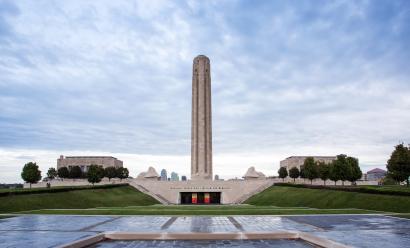
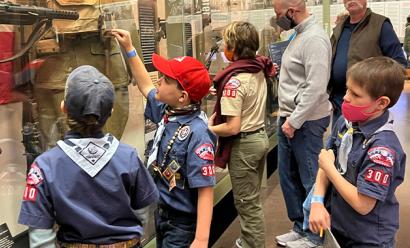
On the Memorial Day of our centennial year, join us as we give special honor and recognition to the individuals who sacrificed their lives while serving their country.
2026 Centennial Memorial Day Weekend
Friday, May 22 - Monday, May 25
Admission discount during Memorial Day Weekend:
- Free admission for veterans/active-duty military (including spouses and dependents with ID)
- Half-price admission for the public
Note on parking
Due to set-up for the upcoming FIFA World Cup Fan Festival, there will be EXTREMELY LIMITED PARKING available on the grounds on Memorial Day Weekend. We would advise you to park near the Streetcar line and take the KC Streetcar to the Union Station stop.
Walk from the Union Station stop to the intersection of Pershing Rd and Kessler Rd, where you will enter the grounds. (Google Maps) (Apple Maps) (OpenStreetMap)
Or take the city bus to Union Station, then walk to Pershing and Kessler. (Google Maps) (Apple Maps) (OpenStreetMap)
2026 Centennial Memorial Day Weekend Events
(Subject to change)
World War I Research Stations
When: During Museum hours, 10 a.m.-5 p.m.
Where: Outside Auditorium Lobby
What: Find your connection to World War I during Memorial Day weekend through research stations at the Museum. With access to multiple databases including Fold3.com, Ancestry.com, the Museum and Memorial’s online collections database, the American Battlefield Monuments Commission and the National Archives, discover how the Great War affected your family through records, photographs and much more. FREE to the public.
Flags of Forgotten Soldiers Display
When: Through Memorial Day
Where: Walkway Terrace near Main Entrance
What: The Department of Veterans Affairs reports that every 72 minutes, a servicemember takes their own life. This moving display of 140 U.S. flags calls attention to the fact that 140 veterans are lost to suicide every week. FREE to the public.
Trees of Remembrance
When: Friday-Monday, May 22-25 | 10 a.m.-5 p.m.
Where: Glass Bridge
What: In remembering, we can never forget. Commemorate the service and memory of a fallen soldier by adding their name to a poppy blossom, displayed on the branches of the Trees of Remembrance. FREE to the public.
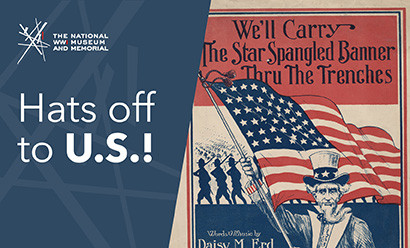
Hats Off to U.S.
When: Friday-Monday, May 22-25 | 10 a.m.-5 p.m.
Where: Main Entrance
What: The National WWI Museum and Memorial is proud to be part of the #OnOur250th initiative honoring the United States' 250th birthday in 2026. We stand with other cultural institutions and organizations around the United States in this moment of celebration of the resiliency of the nation – and in remembrance of those who have made great sacrifices towards a more perfect union. Celebrate with star-spangled salutations! Stop by the front entrance to send off your birthday wishes to Uncle Sam. FREE to the public.
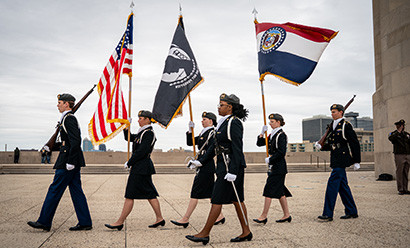
Memorial Day Ceremony
When: Monday, May 25, 10 a.m.
Where: Memorial Courtyard
What: A formal public program to include remarks from dignitaries and a keynote address from General (Ret.) Richard Myers. He served for 40 years in the United States Air Force and retired as the 15th Chairman of the Joint Chiefs of Staff.
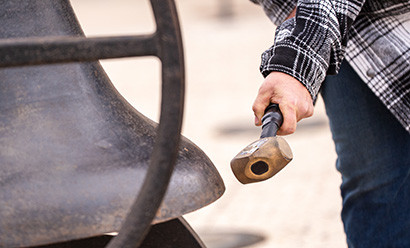
The program will also include a bell tolling ceremony; a reading of the names of the 441 residents of Kansas City, Missouri who died serving the country in WWI; and a laying of 441 wreaths in honor of the war dead.
ASL interpretation will be provided for the ceremony. FREE to the public | Onsite
Walk of Honor Dedication
When: Monday, May 25, 2 p.m.
Where: Auditorium
What: New Walk of Honor granite bricks will be dedicated during a special ceremony. The Walk of Honor includes bricks dedicated to those who served in World War I, to veterans of any military service and bricks honoring civilian friends, family or organizations. Bricks are dedicated each year during a Memorial Day ceremony. FREE to the public | Onsite
WW1USA Amateur Radio Station
When: Monday, May 25 | 10 a.m.-5 p.m.
Where: 7600 W 75th St, Overland Park, KS 66204 (Overland Park Christian Church)
What: The Museum and Memorial is teaming with area amateur radio operators to remotely host special event station WW1USA. During this time, station operators will contact hundreds of other amateur radio operators across the world. Are you a short-wave radio operator? Join us! Learn more at ww1usa.org. Open to the Public
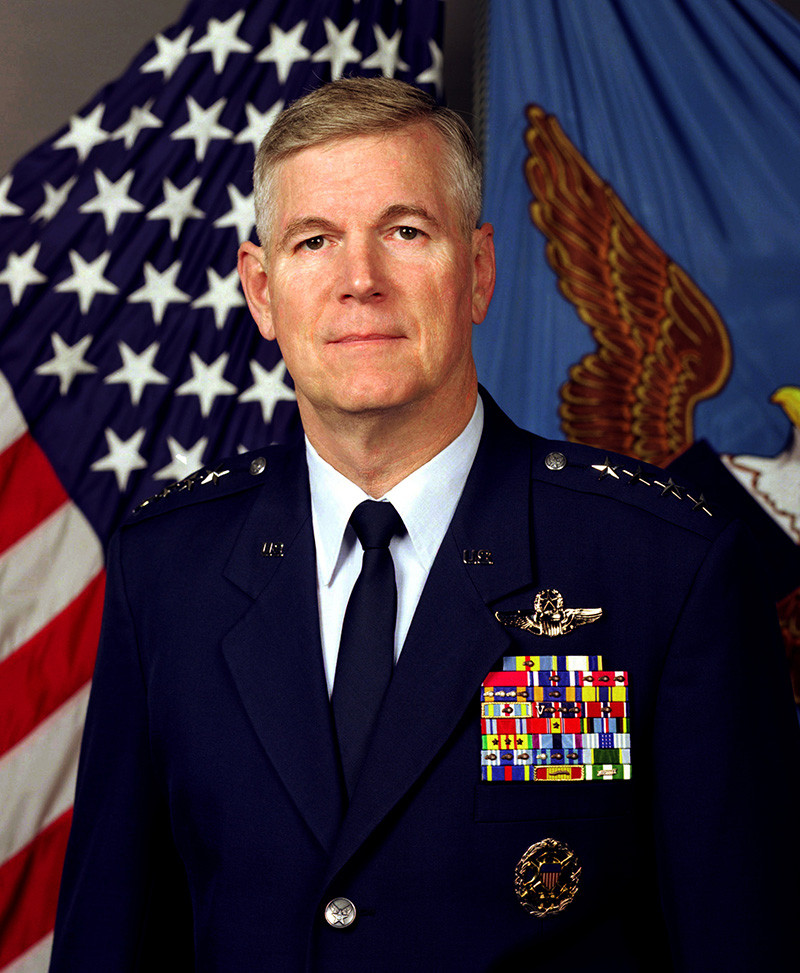
Richard Bowman Myers
General, United States Air Force, Retired
15th Chairman of the Joint Chiefs of Staff
-
Image
-
Richard Bowman Myers was born on 1 March 1942 in Kansas City, Missouri. He grew up in a middle class suburban neighborhood, the son of a regional manufacturing representative and former primary school teacher. While attending Shawnee Mission North High School he played the saxophone and piano in a small band and competed in football, basketball, and track. After graduating from high school in 1960, Myers entered Kansas State University-Manhattan. Enamored with airplanes – jet fighters in particular – since his first ride on a commercial airliner, he enrolled in the Air Force Reserve Officer Training Course and acquired his private pilot’s license while participating in the program. In January 1965 he graduated with a bachelor of science in mechanical engineering and was subsequently commissioned a second lieutenant on 3 February 1965.
That June Second Lieutenant Myers began flight training at Vance Air Force Base, Oklahoma, learning to fly the Cessna T-37 Tweet and Northrop T-38 Talon aircraft. After earning his wings a year later, he transferred to Davis-Monthan Air Force Base, Arizona, and completed back-seat pilot training in the MacDonald F-4 Phantom fighter-bomber. First Lieutenant Myers then joined the 417th Tactical Fighter Squadron, stationed at Ramstein Air Base, Germany; the squadron would redeploy to Mountain Home Air Force Base, Idaho, in August 1968.
In June 1987 Colonel Myers returned to Langley Air Force Base. His first of five assignments there was as Commander of the 1st Tactical Fighter Wing, which was responsible for the air superiority mission and primarily focused on the Persian Gulf region. After completing this tour in February 1989, he transferred to Headquarters Tactical Air Command. He subsequently served as the Assistant Deputy Chief of Staff for Plans until June 1989, Inspector General until January 1990, Deputy Chief of Staff for Plans until June 1990, and Deputy Chief of Staff for Requirements until December 1991. These successive staff assignments enabled him to become intimately familiar with operational requirements and modernization programs, such as the joint surveillance and target attack radar system that would launch the Air Force into the 21st Century. On 1 April 1990 Myers received his first star.
In September 1999 President William J. Clinton nominated General Myers to become the fifth Vice Chairman of the Joint Chiefs of Staff. The Senate Armed Services Committee confirmed his appointment, and on 1 March 2000 he joined the Chairman of the Joint Chiefs of Staff, General Henry H. Shelton, USA, and Secretary of Defense William S. Cohen in the Pentagon. As second ranking member of the uniformed services, Myers was a full member of the Joint Chiefs of Staff and chaired the group’s meetings during Shelton’s absence.
General Myers, while serving as acting Chairman on September 11, 2001, participated in the immediate response to the 9/11 attacks and assisted General Shelton in developing a strategy to defeat, disrupt, and delay terrorism around the world – the Global War on Terrorism – as well as eradicate al-Qaeda and Taliban forces in Afghanistan.
Nominated by President Bush to become the 15th Chairman of the Joint Chiefs of Staff, General Myers completed the confirmation process in the midst of the post 9/11 turmoil and was sworn into office on 1 October 2001, becoming the first Vice Chairman to succeed his predecessor. He laid out three personal priorities: to continue the Global War on Terrorism, to pursue transformation of the military, and to support military personnel and their families. As the principal military advisor to the President, National Security Council, and Secretary of Defense, he relied on the Joint Chiefs of Staff’s advice on national security matters and promoted a collegial atmosphere conducive to reaching consensus.
General Myers retired from the military on 30 September 2005, after more than 40 years of active service. In recognition of his contribution, which included more than six hundred combat flight hours during the Vietnam War, he received the Presidential Medal of Freedom on 9 November 2005.
Since retirement from the military, General Myers has served on several public and non-profit boards, and also held the Colin Powell Chair for National Security Leadership, Ethics, and Character at National Defense University. From 2016 to February 2022, General Myers was the President of Kansas State University.
2026 Sponsors

G.E.H.A.
Hunt Family Foundation
This project is supported in part by the City of Kansas City, Missouri Neighborhood Tourist Development Fund