Image
Why did the U.S. Fight in WWI?
Why did America enter World War I? When WWI began in Europe in 1914, many Americans wanted the United States to stay out of the conflict, supporting President Woodrow Wilson’s policy of strict and impartial neutrality. “The United States must be neutral in fact as well as in name during these days that are to try men’s souls. We must be impartial in thought as well as in action, must put a curb upon our sentiments as well as upon every transaction that might be construed as a preference of one party to the struggle before another.”
Although a vocal segment of the population favored “preparedness” for war (especially strengthening the U.S. military) and over a hundred thousand Americans volunteered for the international war effort, support for neutrality and isolationism was strong.
Despite the U.S. position, many Americans personally sympathized with Britain, France and their allies. American institutions lent large sums to the Allied governments, giving the U.S. a financial stake in the outcome of the war. Nearly 10% of Americans identified as ethnic Germans, most of whom hoped the United States would remain neutral in the war.
Public opinion began to shift away from neutrality following Germany’s sinking of the Lusitania in May 1915, which resulted in the deaths of nearly 1,200 passengers, including 128 Americans. In the face of strong U.S. reactions, Germany temporarily backed off its submarine attacks on passenger and merchant marine ships in the Atlantic.
Audio file
"Let nations arbitrate their future troubles, It’s time to lay the sword and gun away, There’d be no war today, If mothers all would say, I didn’t raise my boy to be a soldier."
By 1915, especially in Eastern cities, a new Preparedness Movement proclaiming that the U.S. needed to immediately build up strong naval and land forces for defensive purposes. Interventionists, like former president Theodore Roosevelt, rallied to shape public opinion. “Preparedness against war does not invariably avert war, any more than a fire department in a city will invariably prevent a fire, and there are well-meaning, foolish people who point out this fact as offering an excuse for unpreparedness.”
Equally strong in 1916, was the support for a continued policy of strict neutrality in the World War. In June of that year, New York Governor Martin Glynn stated at the Democratic National Convention in St. Louis, “The doctrine of neutrality is so closely woven into the warp and woof of our national life that to tear it out now would unravel the very threads of our existence. Is there any American so blind to our past, so hostile to our future that, departing from our policy of neutrality, he would hurl us headlong into the maelstrom of the war across the sea?”
What Changed?
In November of 1916, President Woodrow Wilson won a close re-election under the slogan “He Kept Us Out of War.” Yet in early 1917 when Russia’s internal political revolutions effectively took them out of the war against Germany, the prospects for the Allies darkened. Already receiving massive shipments of supplies and a near limitless line of credit from the U.S., the Allies needed reinforcements.
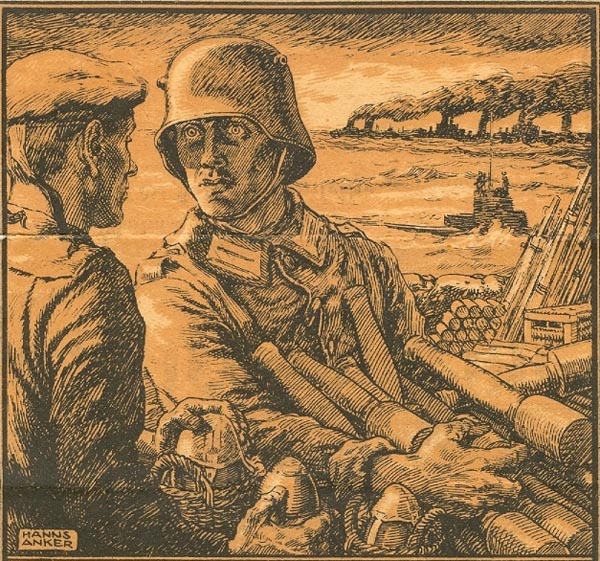
When easing Eastern military pressures made more forces available for their Western Front, Germany sensed the tide was turning. To capitalize on the shift, German leaders agreed in January of 1917 to resume unrestricted submarine warfare to break the devastating army stalemate in Europe and the British navy’s successful blockade of critical German supply ports. This pushed American public opinion toward intervention.
Germany’s unrestricted submarine warfare strategy sent more merchant and passenger ships to the ocean’s floor and the loss of American lives mounted. The U.S. protested and in February severed diplomatic relations with Germany, while Congress appropriated funds for increased military affairs.
About the same time, British cryptographers intercepted and began deciphering Germany’s “Zimmermann Telegram” offering U.S. territory to Mexico in return for joining the German cause. Though Mexico declaring war was not perceived as an imminent threat by the American public, sensational headlines trumpeted each new development as one of history’s most influential acts of codebreaking played out. Across the nation, support grew for intervention.
On March 20, almost a month after the Zimmerman Telegram hit the American press, President Wilson convened the Cabinet to discuss moving from a policy of armed neutrality to war. It was unanimous: all members advised war. With a proclamation already being drafted by President Wilson, the American steamship Aztec was torpedoed and sunk by Germany on April 1.
The Zimmermann Telegram
Investigate the German offer to Mexico that inflamed international tensions.
On April 2, President Wilson asked Congress to declare war against Germany specifically citing Germany’s renewed submarine policy as “a war against mankind. It is a war against all nations.” He also spoke about German spying inside the U.S. and the treachery of the Zimmermann Telegram. Wilson urged that “the world must be made safe for democracy.” For four days, Americans debated the momentous decision and most major newspapers published a sensationalized mix of war news and rumors that cast Germany as a ruthless enemy.
On April 4, the Senate voted to declare war against Germany by a vote of 82-6. At 3:12 a.m. on April 6, the House of Representatives passed the resolution in a vote of 373 to 50.
The United States went to war.
Filling the Ranks
Learn how the U.S. built a military machine.
Timeline of Events: U.S. Enters the War
For a complete timeline of global events in World War I, visit the Museum's Interactive WWI Timeline
Interactive timeline showing 16 events, one at a time. Use the previous and next buttons, or the left and right arrow keys, to move between events. The timeline navigation below lets you jump to any event.
-
Europe Goes to War
Beginning July 28, 1914 with Austria-Hungary declaring war on Serbia in retaliation for the assassination of Archduke Franz Ferdinand, a complicated web of alliances plunges the nations of Europe into war within a month.
The United States stays politically neutral. -
President Wilson Protests Germany's Threat to Neutral Shipping
The U.S. describes Germany's policy as "unprecedented in naval warfare" and an "indefensible violation of neutral rights."
-
American Ambulance Drivers Volunteer
In April, the American Ambulance Field Service is founded and over 2,000 Americans volunteer for the war effort, where they served in support roles such as ambulance drivers.
The American Ambulance Field Service would later be known as American Field Service (AFS) and is still in operation today as an international school exchange, volunteer, and learning organization.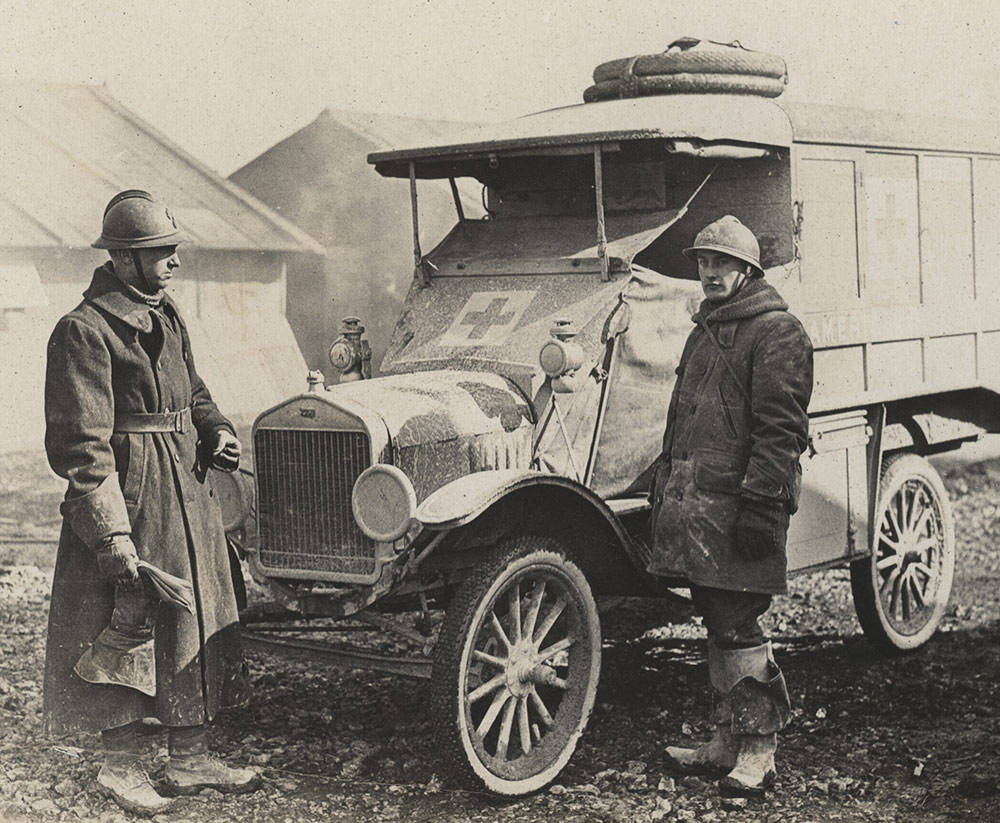
-
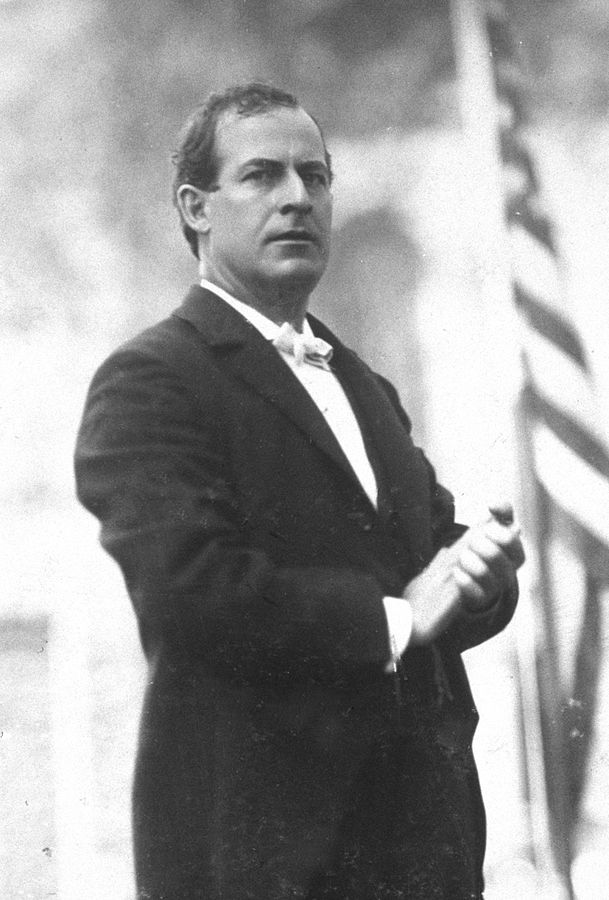
U.S. Secretary of State William Jennings Bryan resigns from office
Bryan cannot support the “war like” official message from President Woodrow Wilson to Germany following the sinking of the British passenger ship Lusitania. Bryan had been urging Wilson to take a more balanced position toward both sides in the war.
-
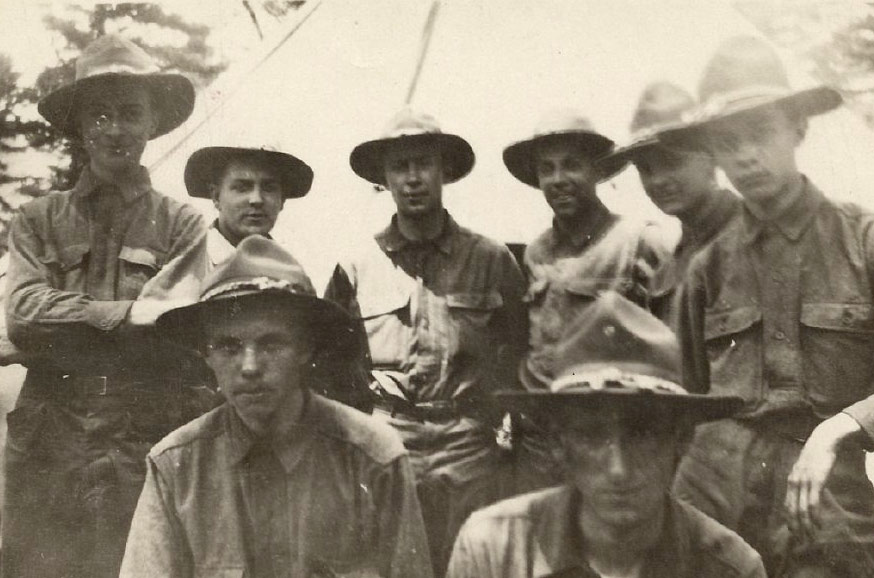
Plattsburgh Training Camps Created
Under the leadership of Army Officer Leonard Wood, the first preparedness training camp was held at Plattsburgh, New York with nearly 1,200 trainees. The camps provided voluntary military training for civilians, in an effort to expand the country's military capability in case the U.S. was drawn into the conflict.
-
Suffrage movement gains momentum in the U.S.
Over 25,000 women march in New York City, demanding the right to vote.
-
Henry Ford leaves the United States on unofficial peace mission
He returned on Dec. 24. “I didn’t get much peace but I heard in Norway that Russia might well become a huge market for tractors soon.”
-
The Words of Henry Sheahan, American Field Service volunteer
“Ambulance after ambulance came from the lines full of clients: kindly hands pulled out the stretchers, and bore them to the wash-room. The uniforms were slit from mangled limbs. The wounded lay naked in their stretchers while the attendant daubed them with a hot soapy sponge – the blood ran from their wounds through the stretchers to the floor, and seeped into the cracks of the stones.”
– Henry Sheahan, American Field Service volunteer, Ambulance Section No. 2, February 22, 1916 at Verdun
-
Pro-German charity bazaar held
In Madison Square Garden a charity bazaar for the widows and orphans of German, Austrian, Hungarian and their allies' soldiers was held. One organizer responded to criticism, “while we are pro-German they are pro-Allied and why should we not be pro-German while this country is not directly involved in the war?”
-
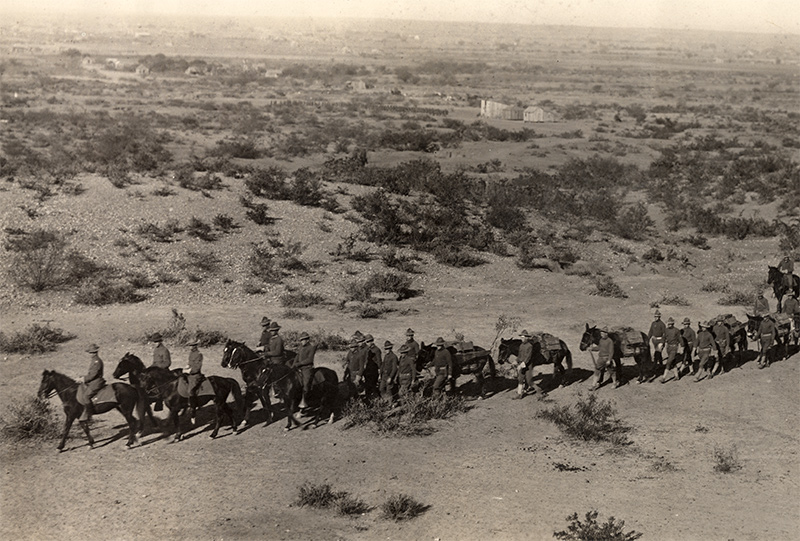
Pershing Goes to Mexico
Under President Woodrow Wilson’s orders, and with permission from President Venustiano Carranza of Mexico, General John J. Pershing leads a “punitive” expedition into Mexico in response to attacks by revolutionary Francisco "Pancho" Villa in the United States. This pursuit resulted in 6,675 U.S. army troops entering Mexico and over 75,000 National Guardsmen being called up.
-
National Defense Act of 1916 Enacted
Congress passes the National Defense Act of 1916. It doubles the size of the Regular Army, increases the National Guard to 475,000, and gives the President authorization to mobilize the Guard in cases such as war or national emergencies.
-
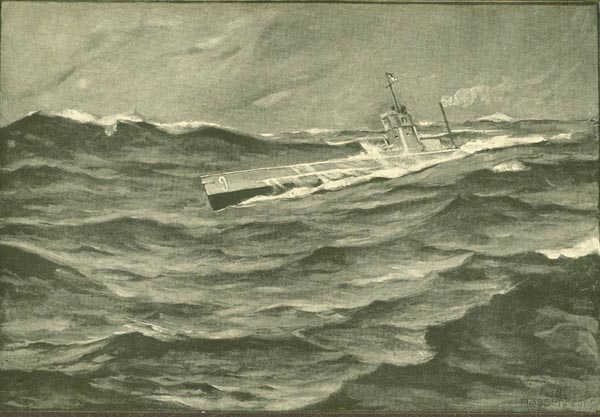
Germans resume unrestricted U-boat campaign
By this time, the Germans feel they have no other choice: the submarine is the only weapon that gives them an advantage over their enemies. Kaiser Wilhelm II gives an order: “To all U-boats – Sink on Sight.”
-
The United States severs diplomatic relations with Germany
President Wilson tells a joint session of Congress that Germany’s policy of unrestricted U-boat warfare poses an unacceptable threat to “freedom of the seas.”
-
U-boats sink Cunard liner Laconia; eight American lives are lost.
“My beloved mother and sister, passengers on the Laconia, have been foully murdered on the high seas. I call upon my government to . . . save others of my countrymen from such deep grief as I now feel. I am of military age, able to fight. If my country . . . remain[s] passive under outrage, I shall seek a man’s chance under another flag.”
—Cable to President Woodrow Wilson from Austin Y. Hoy, an American working in London
-
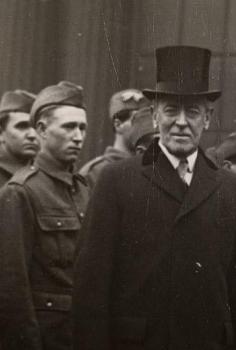
Woodrow Wilson inaugurated a second time as President of the United States
President Wilson is inaugurated in a private ceremony on Sunday, March 4, 1917, publicly taking the oath the next day.
“We are provincials no longer. The tragic events of the thirty months of vital turmoil through which we have just passed have made us citizens of the world. There can be no turning back. Our own fortunes as a nation are involved whether we would have it so or not.”
—President Wilson, from his second inaugural address, March 5,1917
-
Excerpt from President Wilson's Address to Congress
“The world must be made safe for democracy. Its peace must be planted upon the tested foundations of political liberty. We have no selfish ends to serve. We desire no conquest, no dominion. We seek no indemnities for ourselves, no material compensation for the sacrifices we shall freely make. We are but one of the champions of the rights of mankind. We shall be satisfied when those rights have been made as secure as the faith and the freedom of nations can make them.”
—President Wilson, address to Congress, April 2,1917