“Forging a Nation: The Linked Legacies of 1776 and 1917” (Professional development opportunity)
Tailored classroom lesson plans
Field trip update: All time slots for field trips in March have been reserved.
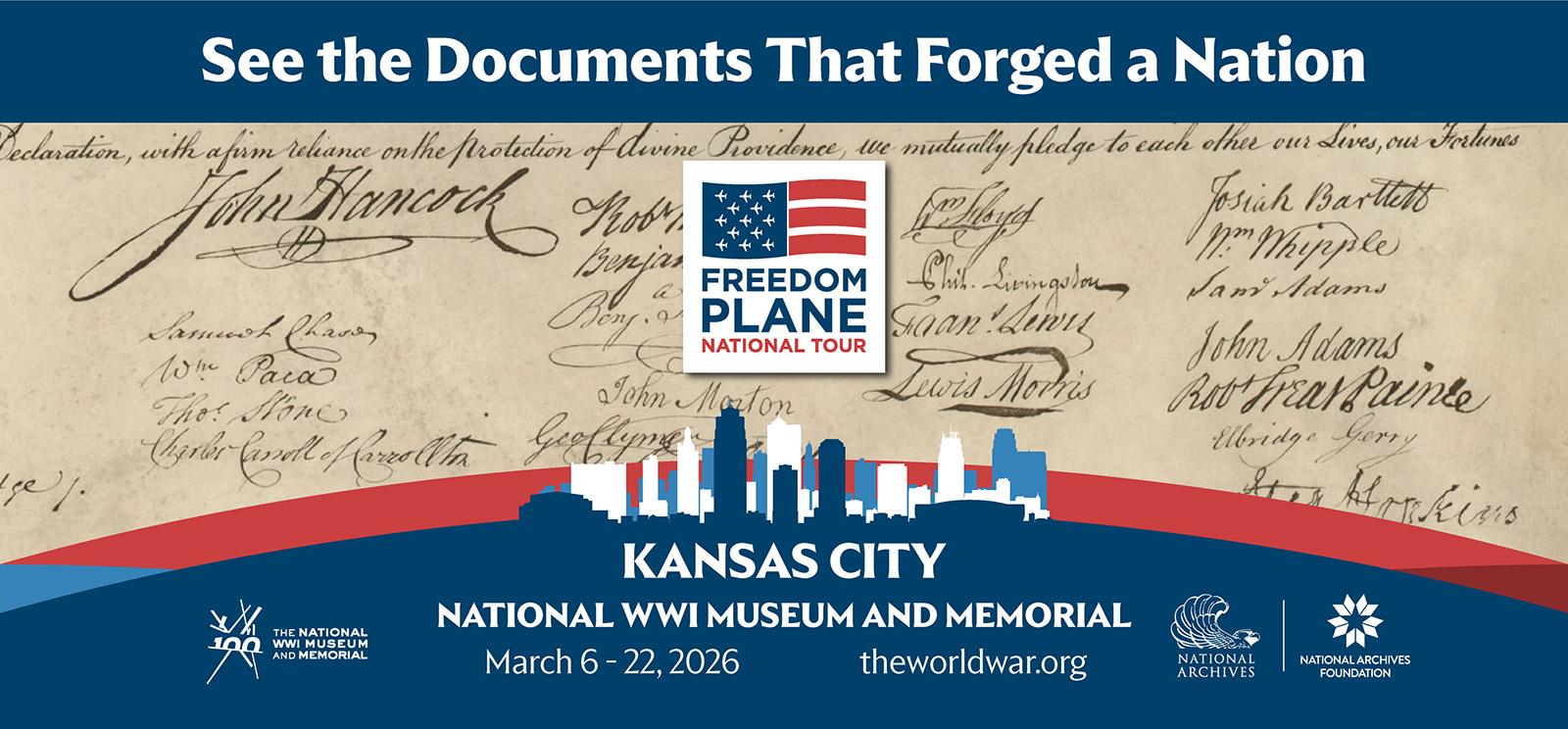
Inspired by the Bicentennial Freedom Train that stopped in Kansas City, Kansas on March 27-30, 1976, the Freedom Plane National Tour will bring historic and consequential documents fundamental to America’s founding to communities across the nation.
Advance tickets: Freedom Plane advance tickets for all dates have been sold out.
Same-day tickets: Free tickets to Freedom Plane can be accessed onsite in the Ticketing Counter line the day of your visit. Tickets are available on a first-come, first-serve basis and may sell out. Exhibition hours and Frequently Asked Questions
“Forging a Nation: The Linked Legacies of 1776 and 1917” (Professional development opportunity)
Tailored classroom lesson plans
Field trip update: All time slots for field trips in March have been reserved.
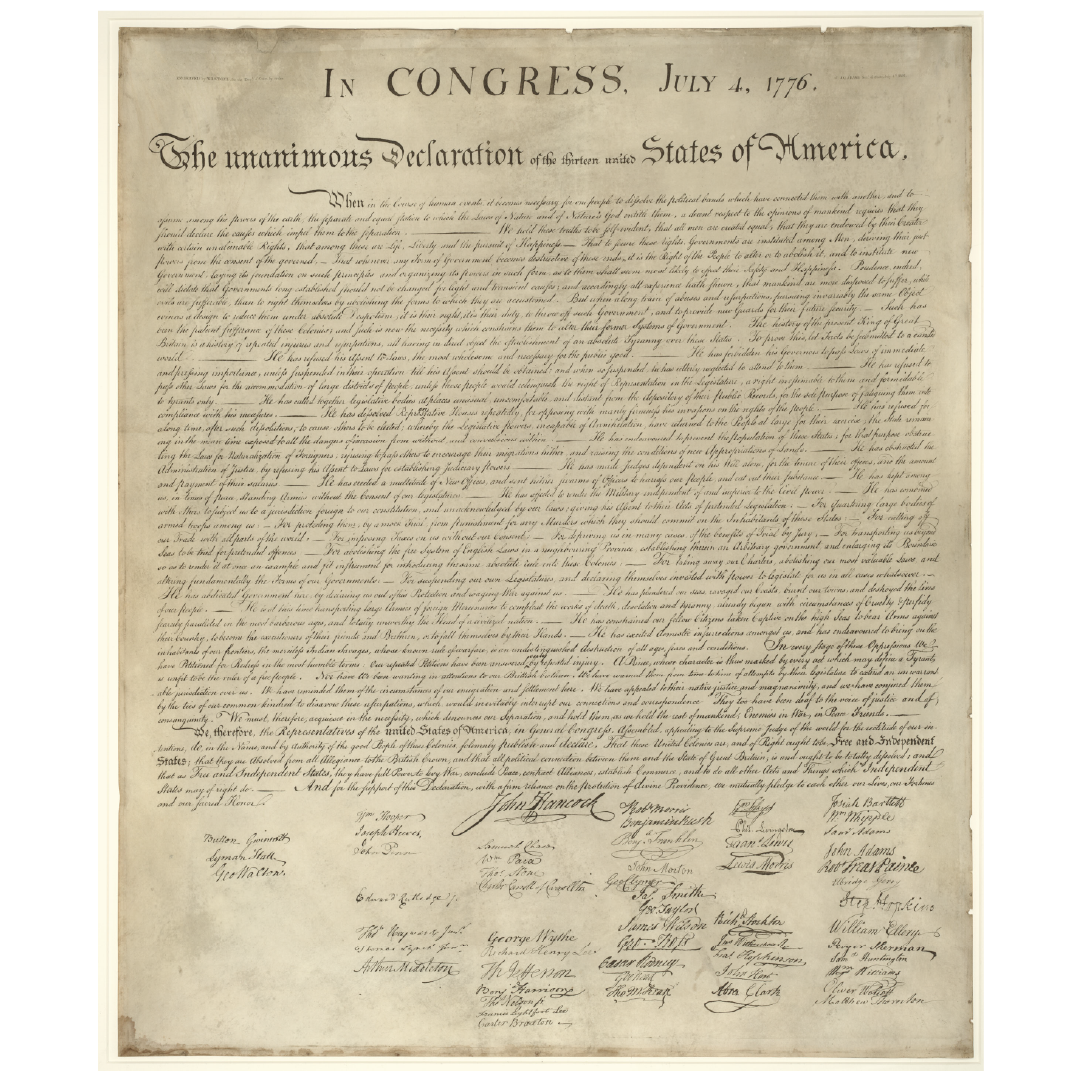
One of only about 50 known engraved copies of the Declaration of Independence, printed from a copperplate of the original. Commissioned by John Quincy Adams and made by engraver William J. Stone, the engraving captured the size, text, lettering, and signatures of the original document (on loan from David M. Rubenstein).
As the Museum and Memorial celebrates its centennial year in 2026, it is particularly meaningful to be the first stop on a national tour of founding-era documents.
During World War I, ideas like self-determination, representative government and individual rights were central to how the United States understood its role in the war and its responsibilities at home and abroad: demonstrating how the nation’s founding principles have been tested during moments of crisis and how they continue to inform conversations about democracy, rights and civic responsibility today.
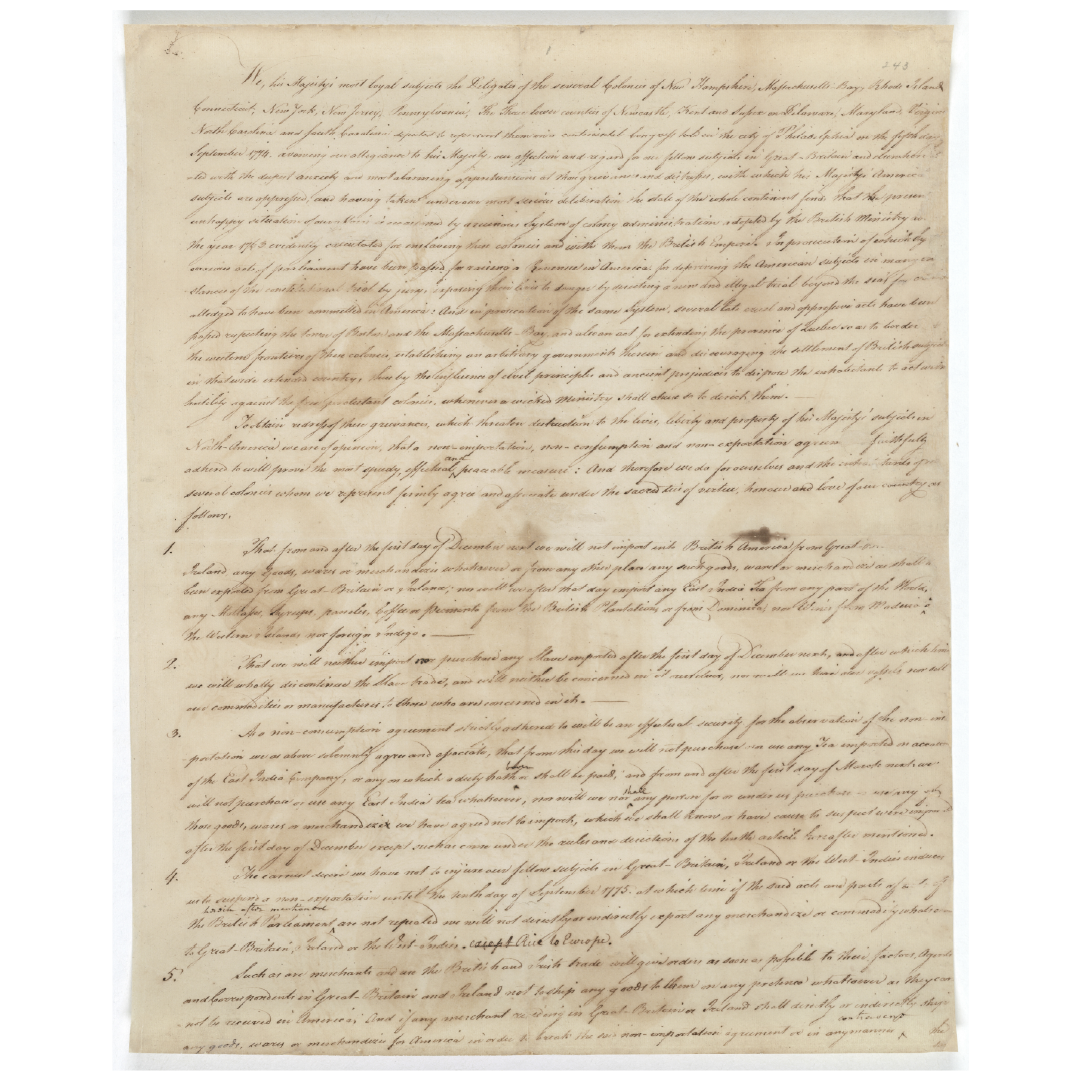
Signed by all 53 delegates, the Articles of Association urged colonists to boycott British goods and was the Continental Congress's first major unified act of resistance against Britain.
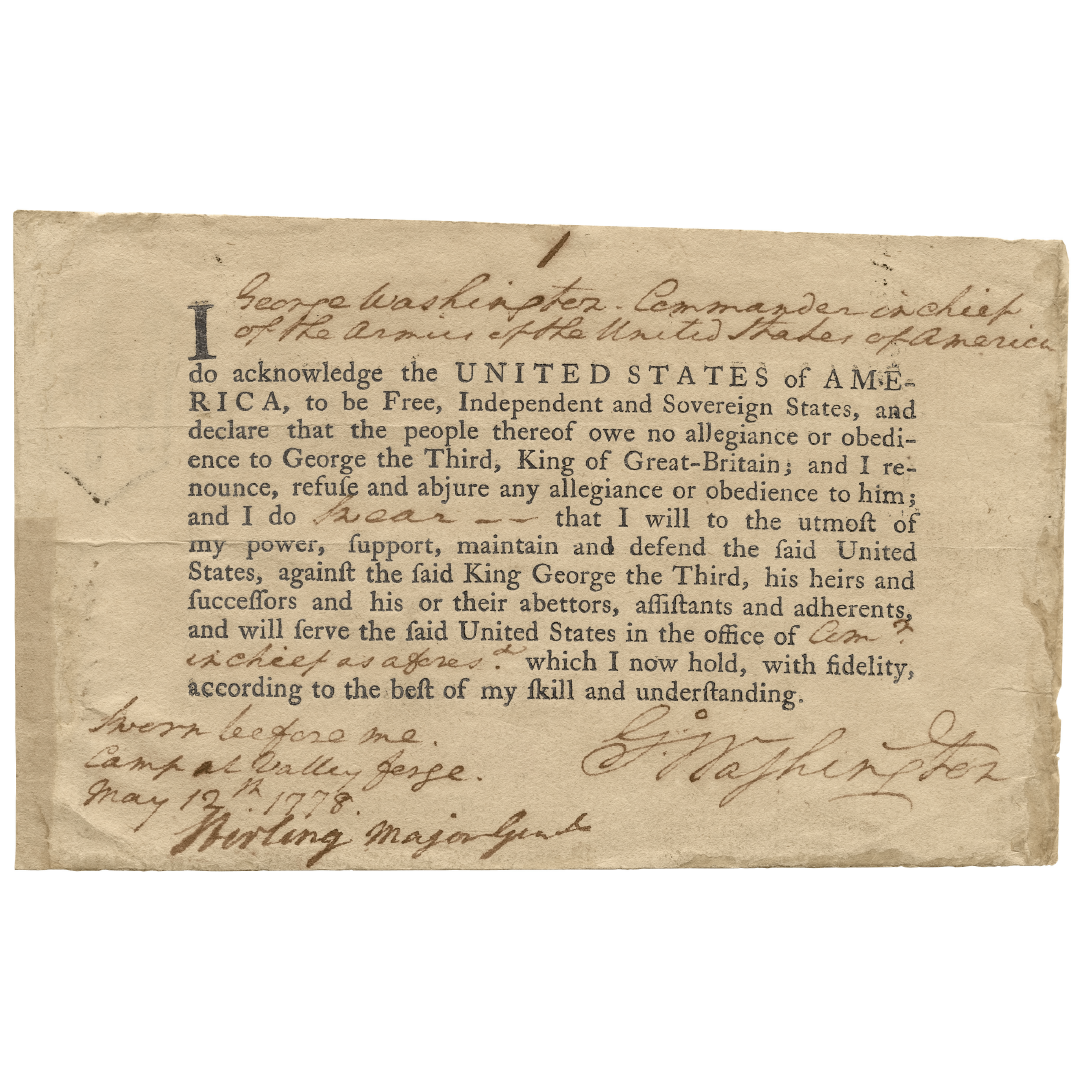
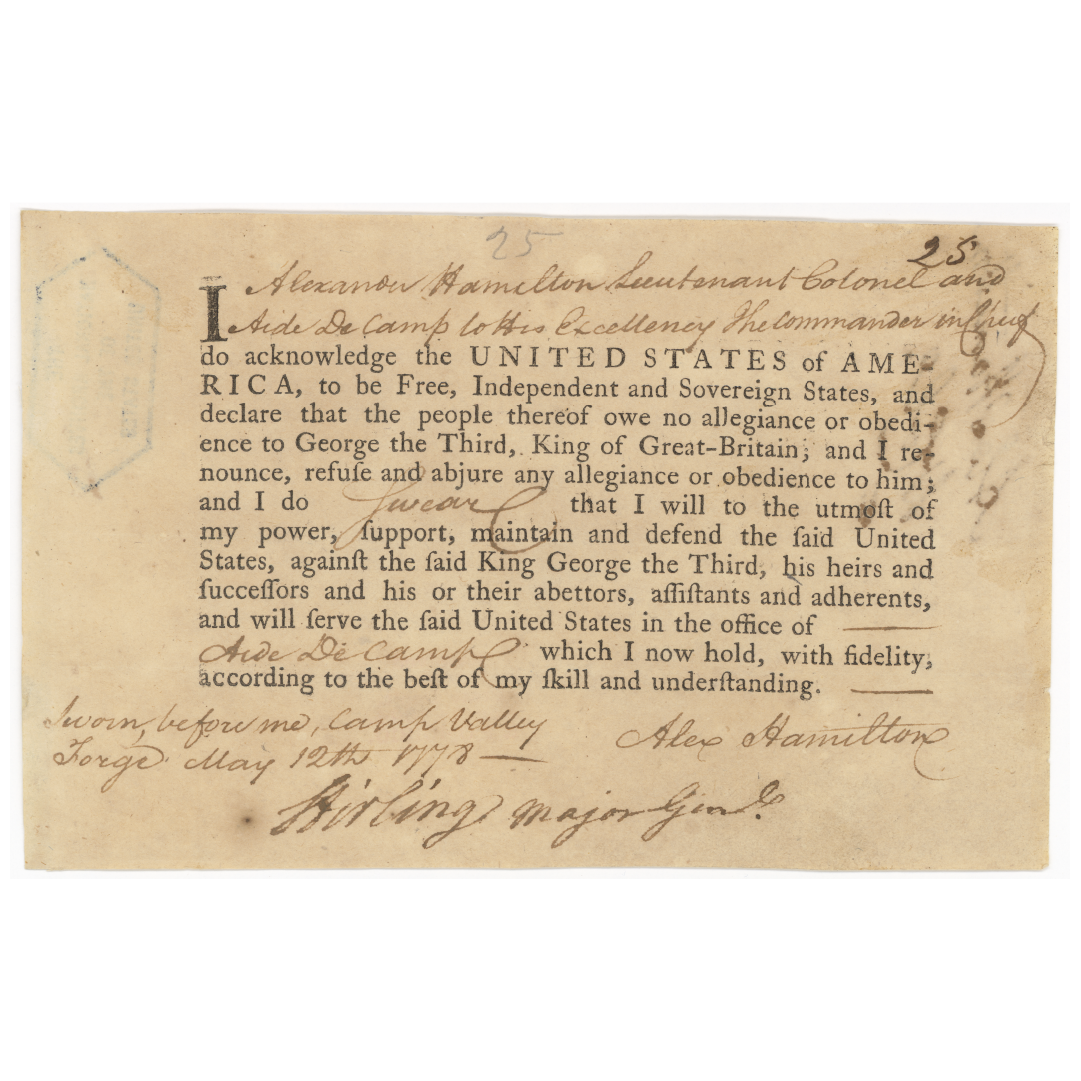
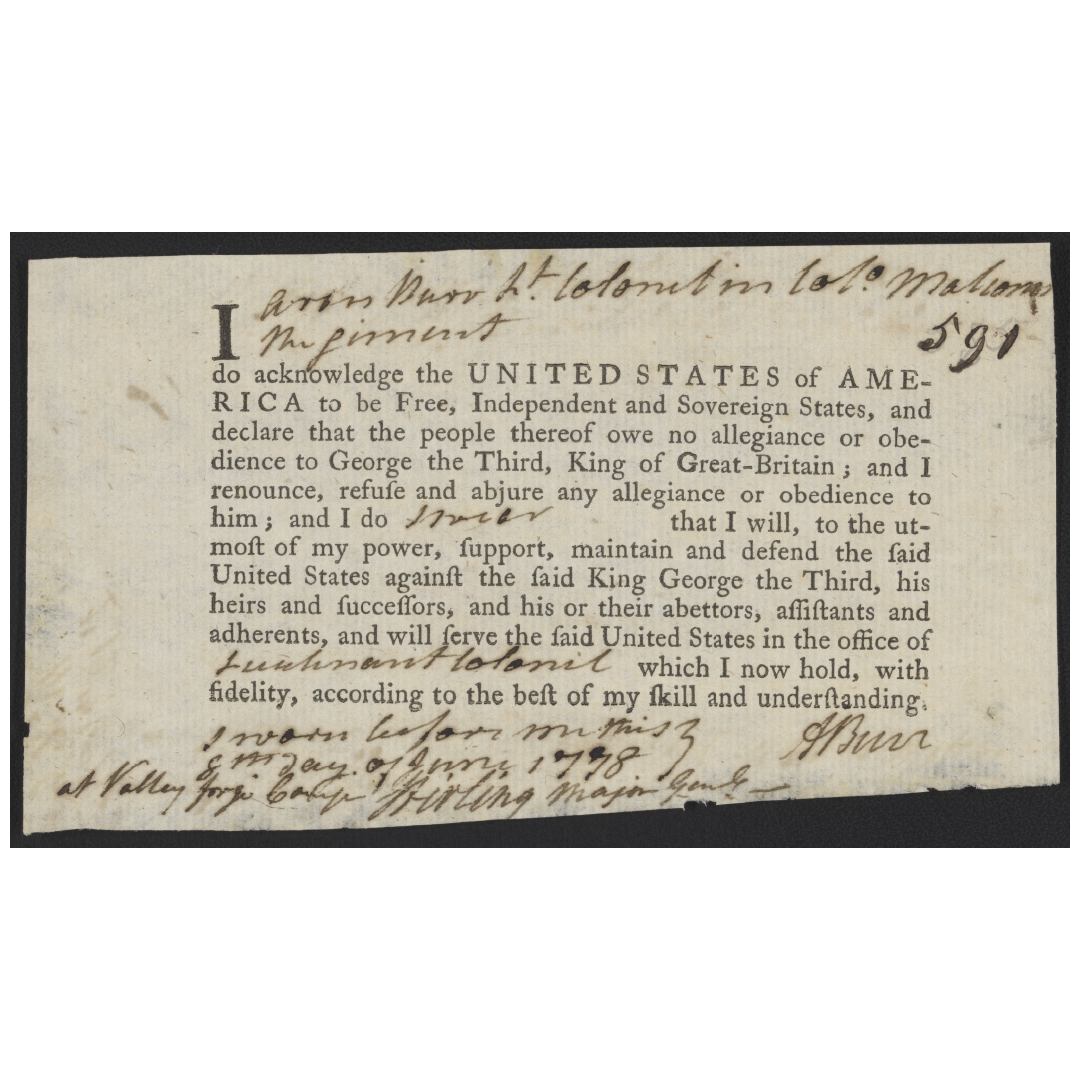
Oaths of Allegiance that all officers of the Continental Army signed during the Revolutionary War.
Signed by John Adams, Benjamin Franklin, and John Jay, this Treaty with Great Britain formally recognized the United States as an independent nation.
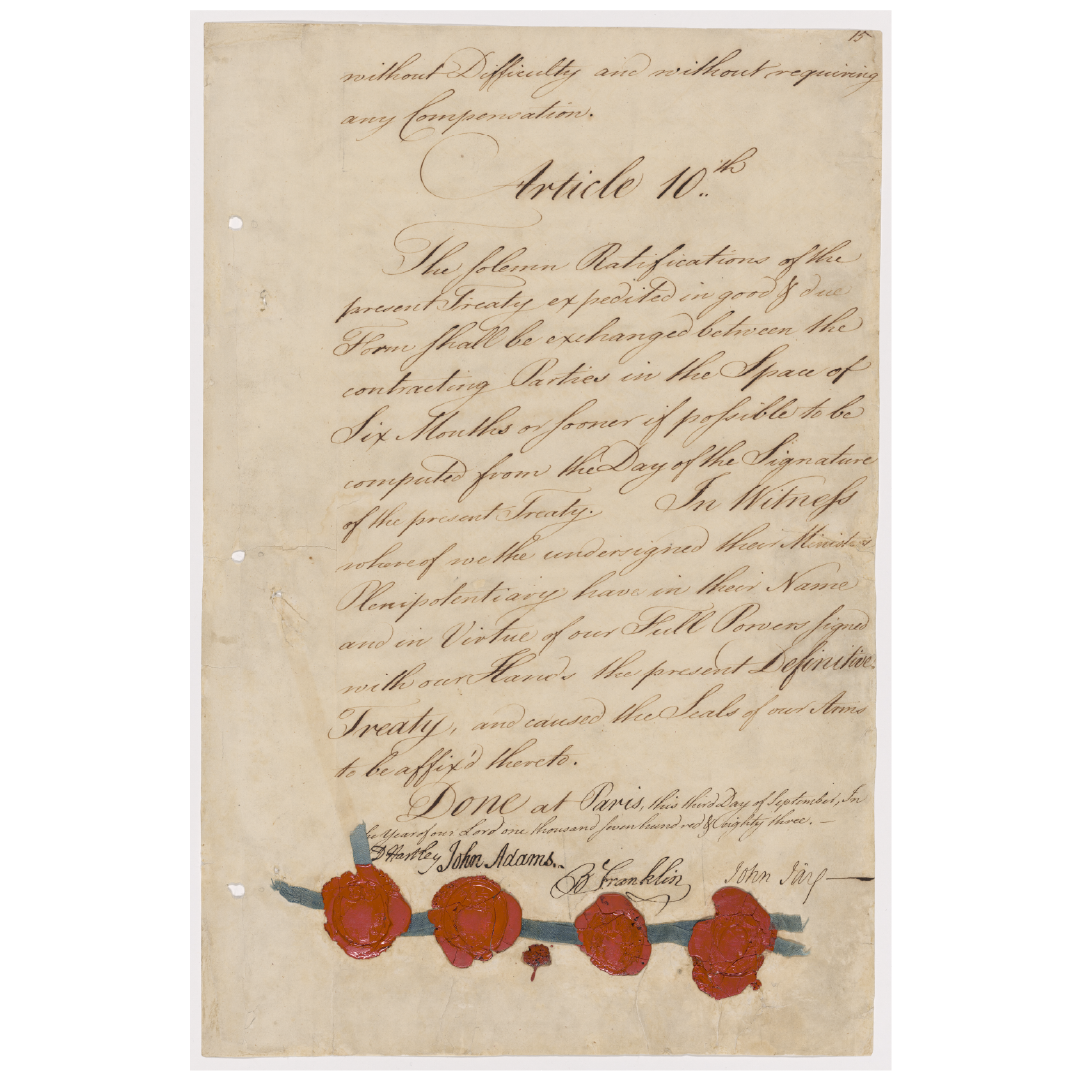
As Americans have debated issues like free speech, citizenship and military service, the founding documents have served as reference points for both national unity and public disagreement.
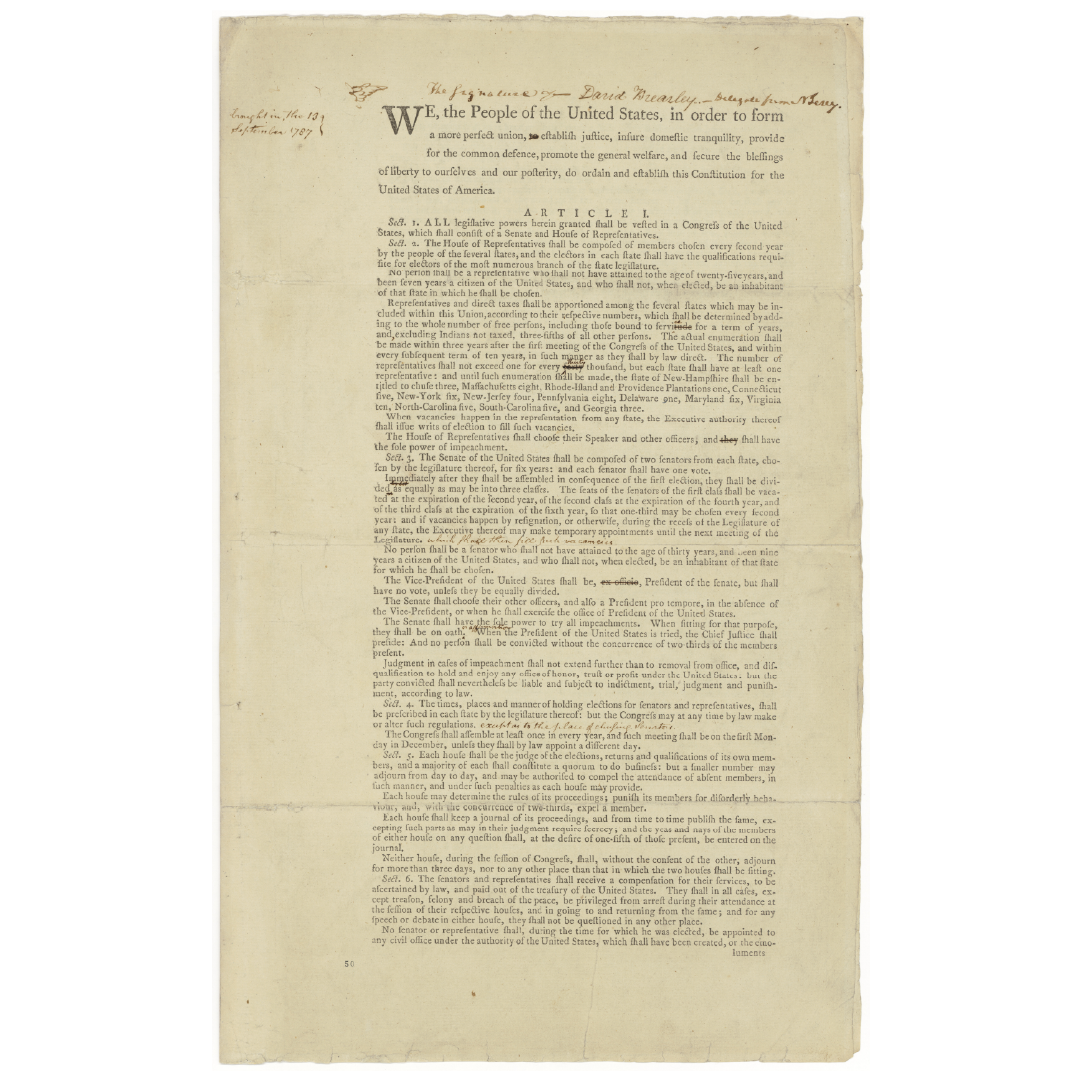
A rare copy of the U.S. Constitution in draft form, with the delegate’s handwritten notes made during the Constitutional Convention in 1787.
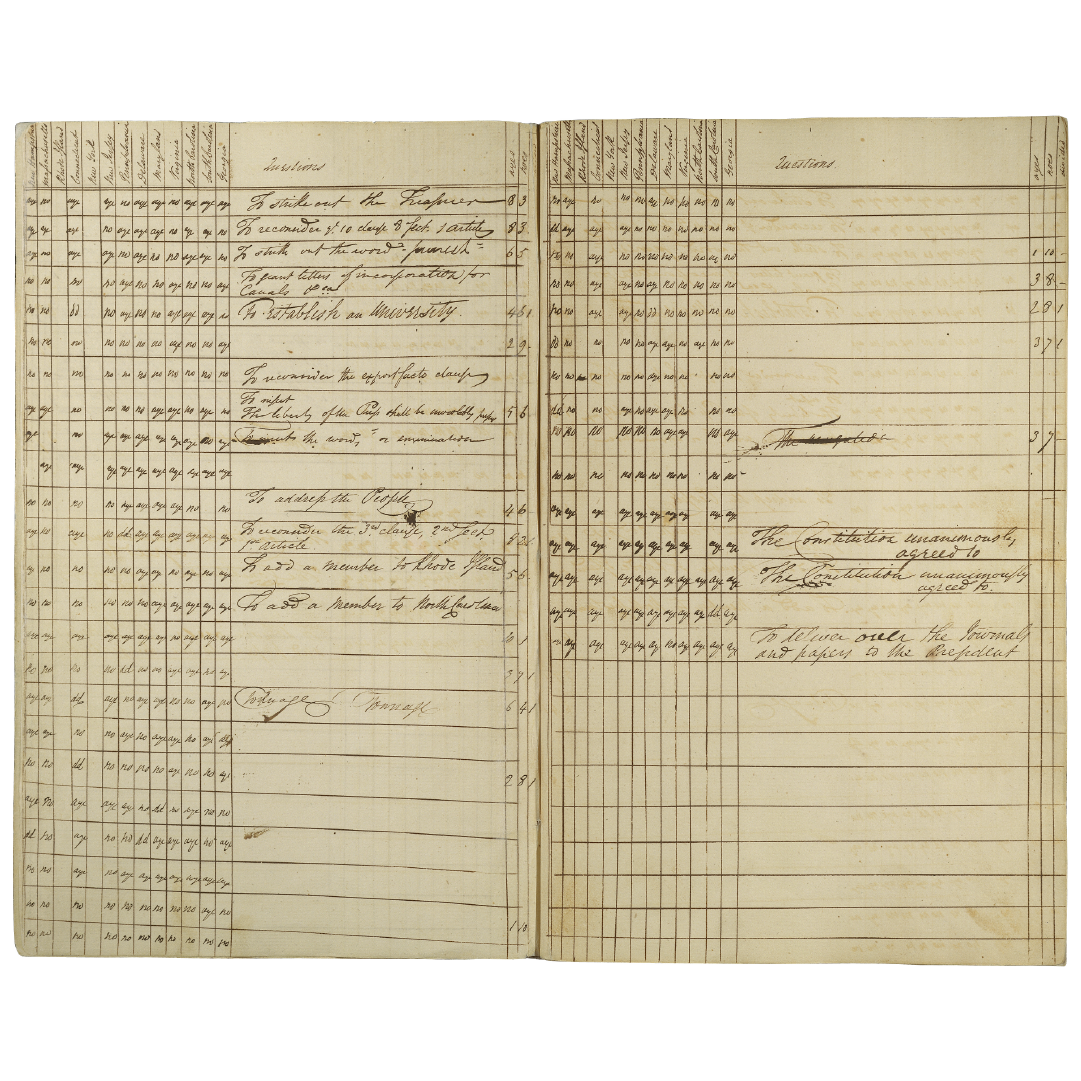
The voting records of the Constitutional Convention reflecting the debates, resolutions, and eventual vote on the final text that would become the Constitution.
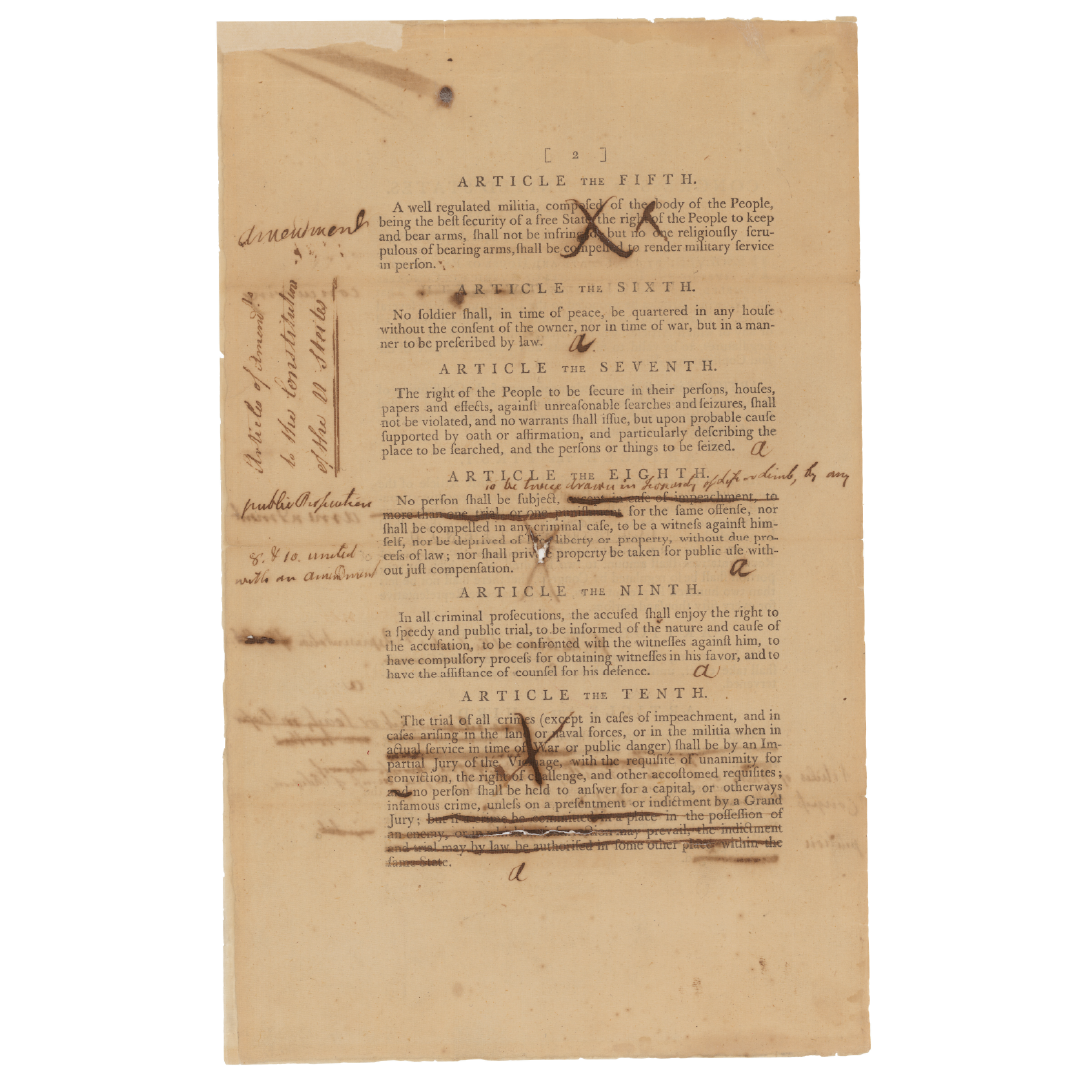
After the Constitution was ratified by the states and became the supreme law of the land, Representative James Madison proposed a series of amendments. Several states advocated for additional protections for individual liberties.
This is the U.S. Senate’s “markup” of what became the Bill of Rights.

Please note: this information is applicable only to those visiting the National WWI Museum and Memorial in Kansas City, Missouri. For other stops on the tour, please refer to ticketing guidelines on each individual museum’s website
Freedom Plane National Tour tickets will be FREE. There are two ways to obtain them:
Freedom Plane advance tickets for all dates have been sold out.
1. On the day of your visit, go to the Ticketing Counter to secure your FREE Freedom Plane tickets. You will have the option to also purchase Museum admission at that time.
2. Proceed to Memory Hall.
Note: Due to anticipated large crowds and the sensitive nature of the documents, lines may form outside the building.
| Museum and Memorial open | Freedom Plane National Tour open | |
|---|---|---|
| March 6-11 | 10 a.m.-5 p.m. | 10 a.m.-5 p.m. (lines close at 4:30 p.m.) |
| Thursday, March 12 | 10 a.m.-5 p.m. | 10 a.m.-8 p.m. (lines close at 7:30 p.m.) |
| March 13-18 | 10 a.m.-5 p.m. | 10 a.m.-5 p.m. (lines close at 4:30 p.m.) |
| Thursday-Saturday, March 19-21 | 10 a.m.-5 p.m. | 10 a.m.-8 p.m. (lines close at 7:30 p.m.) |
| Sunday, March 22 | 10 a.m.-5 p.m. | 10 a.m.-5 p.m. (lines close at 4:30 p.m.) |
The exhibition is in Memory Hall located on the east side of Memorial Courtyard. Due to anticipated large crowds and the sensitive nature of the documents, lines may form outside the building.
Step-free parking is available in the West Visitor Lot or the U-Shaped Drive.
To help protect the artifacts and ensure a comfortable experience for everyone:
In the event the Museum and Memorial is closed, tickets will be honored on the next day the Museum and Memorial is open. Guests may present their tickets at the Ticketing Counter to be transferred to the new date or contact us by email (customerservice@theworldwar.org) to request a refund.

The exhibition at the Museum and Memorial is supported by Presenting Sponsor America 250 Missouri Commission and Premier Sponsor E & K of Kansas City.